Skip to content

Building the next generation of CFD.

Drop in a geometry, run, read the results. No meshing, no parameter tuning. Nabla AI is building a CFD engine that is faster, cheaper, more accurate and supercharged by AI.

Simulation is the cheapest place to find out you got it wrong. It is still far too expensive.

Every aircraft, ship, submarine and rocket is a shape that has to survive contact with air or water. CFD is how engineers find out on a computer whether it flies, goes fast or holds together, before anyone cuts metal.

Yet the workflow has not fundamentally changed in three decades: wrap the geometry in a body-fitted mesh, tune the parameters, hand it to a finite-volume solver, wait. The industry feels that cost every day.

30 years
since the core CFD workflow last changed: mesh, tune, solve, wait.
~60%
of the human effort in a simulation is preprocessing, mostly mesh generation.
Days
of compute lost each time a run diverges on a mesh that looked fine.

If you have run CFD, you know these.

  • The run diverges on day three.

    You spent a week on the mesh, handed it to the solver and waited. Then a handful of bad cells blew up the residuals, and you are back at the mesh. Again.

  • Preprocessing eats the schedule.

    NASA's CFD Vision 2030 study names mesh generation as a major workflow bottleneck, often dominating the human effort a simulation requires. The physics has not even started.

  • Same geometry, two engineers, two drag numbers.

    The answer depends on the mesh and the parameters you picked, not only on the physics. Nobody actually wants that.

  • It takes a whole team.

    Meshing specialists, solver experts, an HPC budget and weeks of calendar time. All of it for a single design point.

  • The wind tunnel is still the fallback.

    Not because blowing air at a scale model is cheap, fast or convenient, but because nobody has made simulation trustworthy enough to replace it.

  • Turbulence gets approximated, not resolved.

    Quieter, safer, more efficient vehicles are decided by eddies a tenth of a hair wide. Resolving them costs more than anyone can afford, so it rarely happens.

Skip the mesh. Drop in an STL, run, read the results.

Nature does not build a mesh or tune a model: the flow resolves itself. We have derived the formulation that makes this possible in an engineering tool, the one whose absence has held this class of methods back for thirty years, and validated it analytically and in simulation.

  1. 01

    Drop in an STL

    Straight from CAD. No cleanup, no body-fitted volume mesh, no parameters to tune.

  2. 02

    Run

    Resolution follows the physics. Compute concentrates where the flow demands it, not where you guessed it would.

  3. 03

    Read the results

    One answer per geometry, independent of who set it up. Analyse, iterate, run the next candidate.

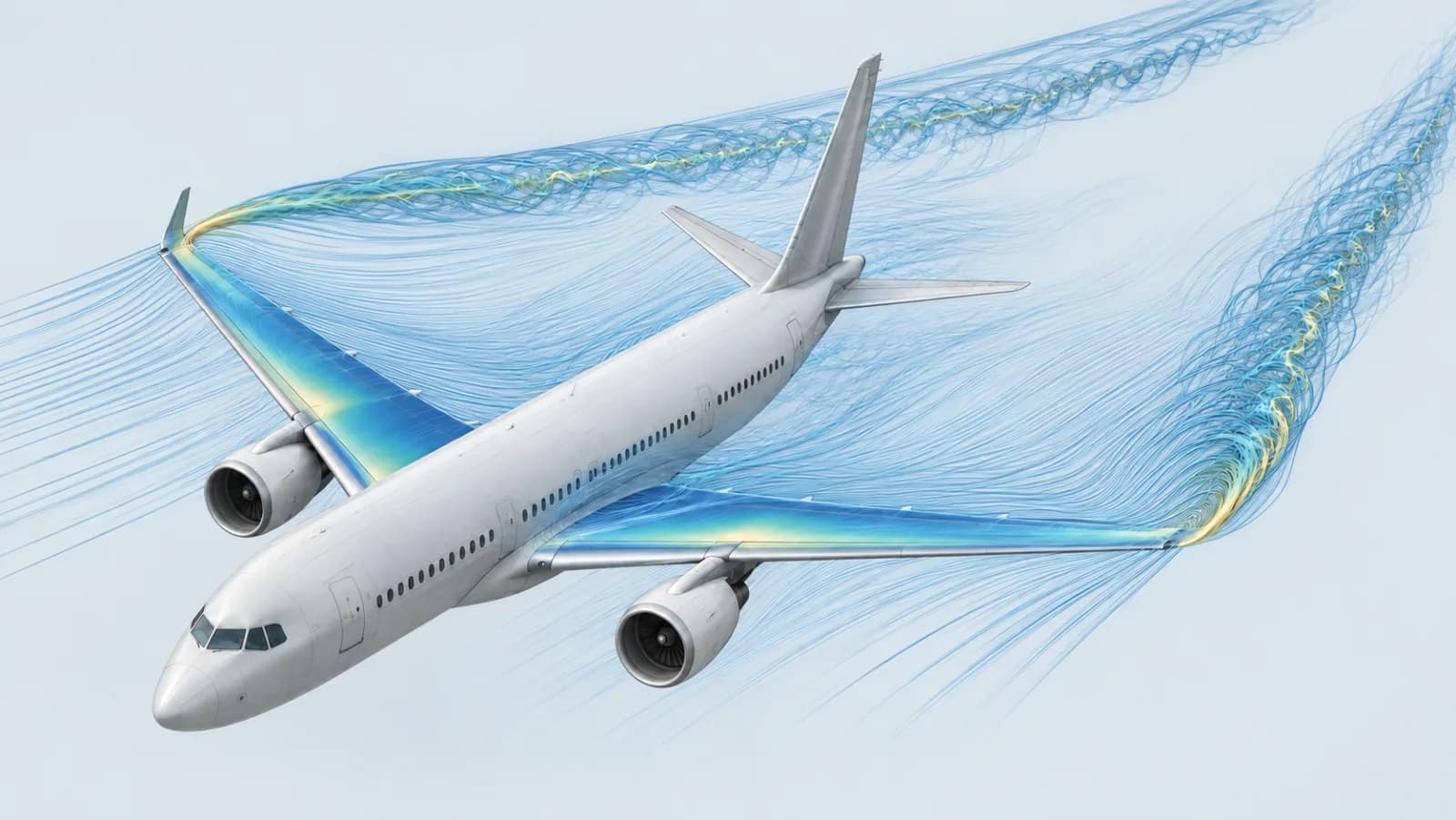
Airliner with resolved wingtip vortices and streamlines over the wings

Resolve the turbulence that decides an aircraft.

Quieter, safer and more efficient aircraft are decided by turbulence, and turbulence has to be resolved, not approximated. Engines, pylons, flaps and wingtips are exactly where body-fitted meshes break. With Nabla the geometry goes in as it is, and resolution concentrates on the boundary layer and the wake, where drag and noise are actually decided.
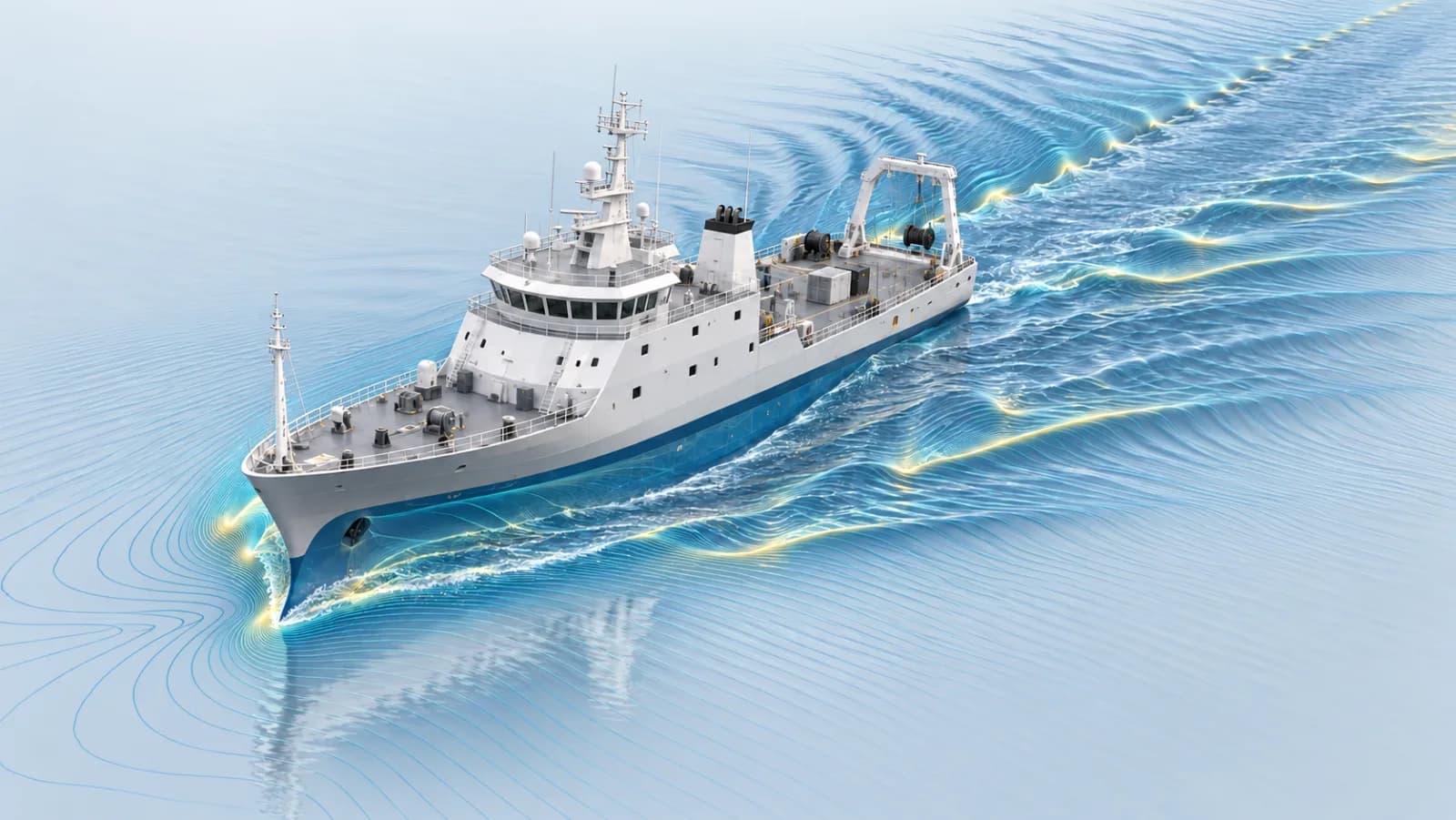
Ship hull with streamlines and wake visualisation

Hull, propeller and wake in a single run.

Hull resistance and propeller wakes are long transient simulations, the kind where a mesh failure on day three hurts most. Without a mesh to fail, a hull form is evaluated from the STL, with resolution concentrated on the free surface and the wake instead of spread uniformly across the domain.

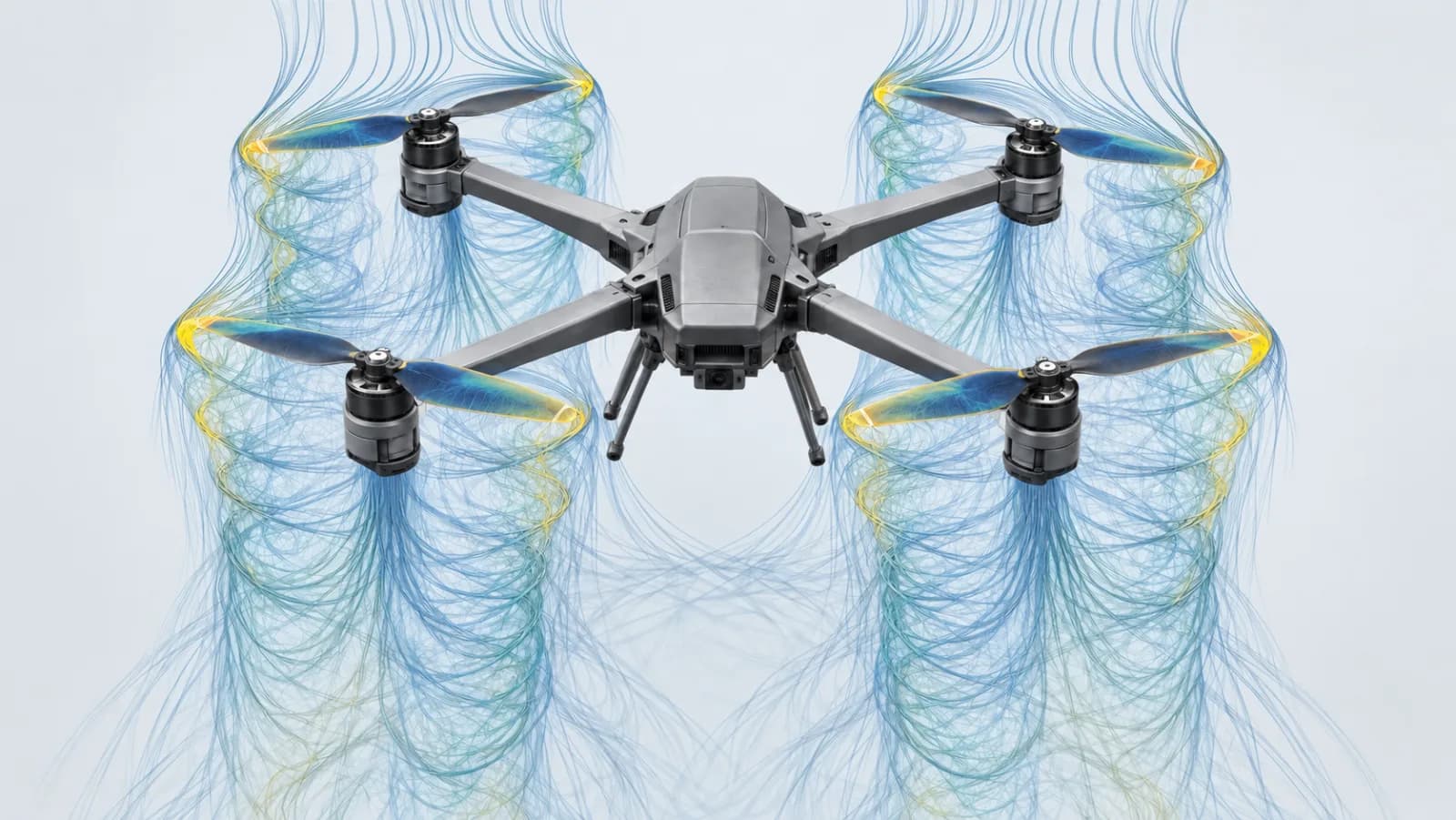
Drone with rotor flow visualisation

Validate designs as fast as AI generates them.

Geometries for drones, vehicles and rotor blades are now generated straight from performance objectives, faster than anyone can validate them. Each candidate used to need its own mesh. With Nabla each one is just another STL, evaluated with real physics rather than a surrogate that returns a plausible answer with no guarantee it holds for a design nobody has simulated before.

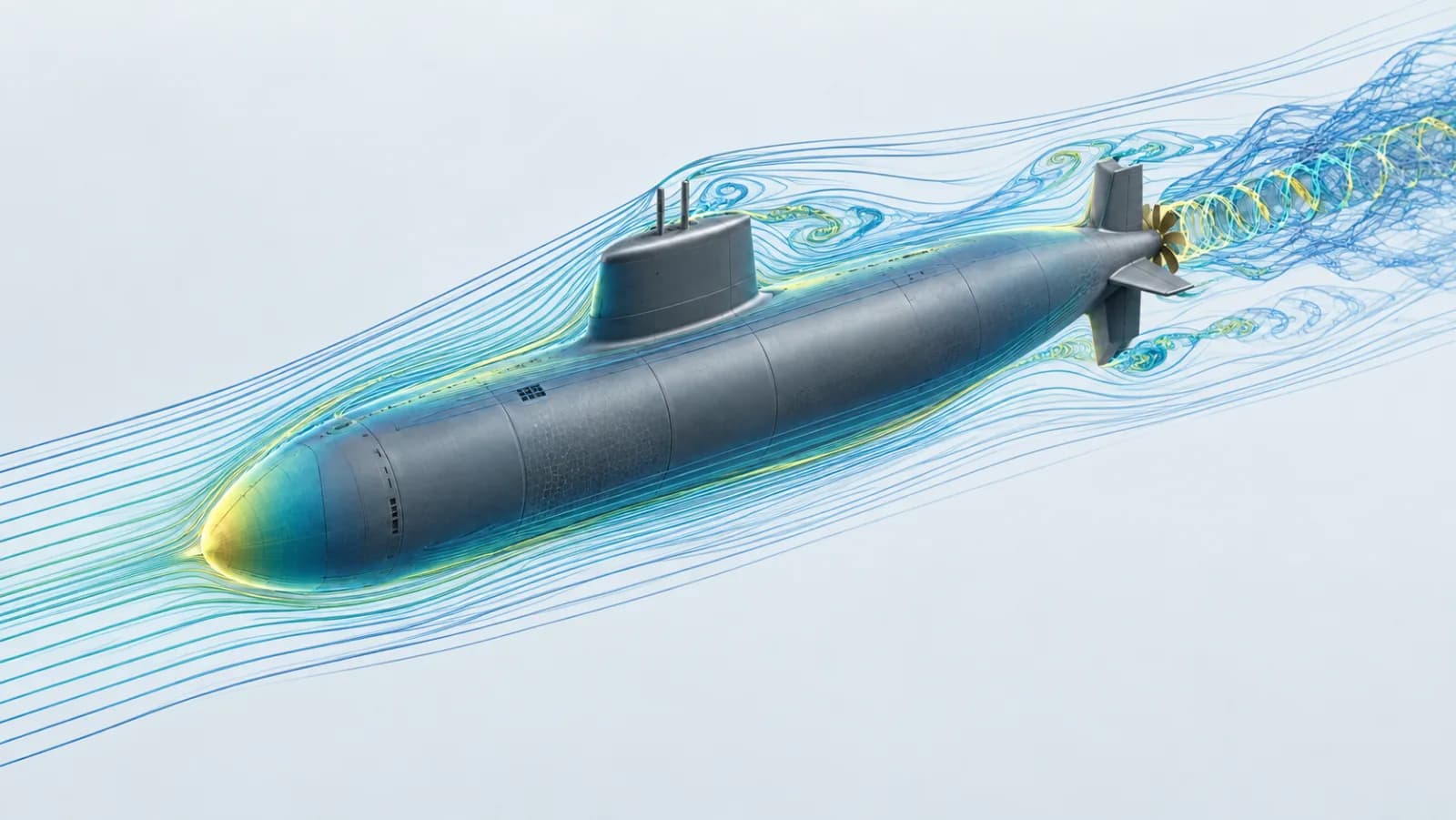
Submarine with resolved flow structures along the hull

Signature is a turbulence problem.

The noise and wake signature of a submarine are decided by the smallest eddies around the hull and sail. Resolving them below a tenth of the width of a human hair, the scale at which they dissipate, is the resolution the industry needs and that nothing on the market delivers at an affordable cost.

How it compares.

Three ways to find out how a shape behaves in a fluid today, and what changes when the mesh goes away.

CriterionNabla AINo-mesh, adaptive CFDTraditional CFDFluent, STAR-CCM+, OpenFOAMAI surrogatesPhysicsX, Neural ConceptWind tunnelPhysical testing
PreprocessingAdvantageDrop in an STLLimitationDays to weeks of meshing and setupPartialA trained model for that design familyLimitationBuild and instrument a scale model
Who can run itAdvantageAny engineerLimitationSpecialised meshing and solver teamLimitationML team plus CFD team for training dataLimitationTest facility and crew
The answer depends onAdvantageThe physicsLimitationThe mesh and parameters chosenLimitationThe training dataPartialScale effects and model fidelity
TurbulenceAdvantageResolved, compute where the flow demands itPartialModelled, or resolved at prohibitive costLimitationApproximated, no guaranteePartialReal, but only where the sensors are
Designs nobody has simulated beforeAdvantageSame physics, same enginePartialYes, with a new meshLimitationUnreliable outside the training setPartialYes, with a new model
Can it fail mid-runAdvantageNo mesh to failLimitationYes: remesh and rerunLimitationNo, but it can be silently wrongPartialRarely, but rescheduling costs weeks
Cost per design iterationAdvantageCompute only, concentrated where it mattersLimitationEngineering hours plus computePartialCheap to run, expensive to trustLimitationVery high

Simulation should become an interactive engineering tool.

As AI generates more candidate designs, our ambition is to make physical evaluation fast enough to support a continuous cycle of generating, simulating and improving them.

Nabla AI is building the computational layer to help make this possible.

A founding team from the institutions that define the field.

Aerospace engineers and computational physicists who have built and run CFD at:

  • Imperial College London
  • CFIS
  • NASA
  • Rolls-Royce
  • CIMNE

Tell us about your simulation workloads.

We are talking to engineering teams tired of meshing, simulation companies, researchers and investors interested in the next generation of CFD. If that is you, we would like to hear what you are running today.

  • Early access for teams with geometries that are hard to mesh
  • Benchmark cases you would like to see run
  • Research and industry partnerships

Barcelona · San Francisco